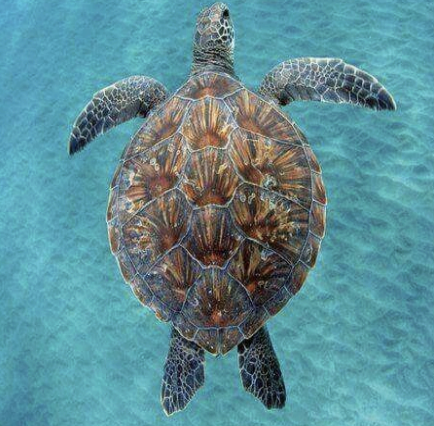
For over 100 million years, sea turtles have traveled vast distances across the world’s oceans, playing a vital role in maintaining the balance of marine habitats.
Status
Endangered
Scientific Name
Families Cheloniidae and Dermochelyidae
Length
2–6 feet
Habitats
Open waters and coastlines
Seven different species of sea turtles inhabit our ocean waters, from the shallow seagrass beds of the Indian Ocean to the vibrant reefs of the Coral Triangle and the sandy beaches of the Eastern Pacific. While these highly migratory species periodically come ashore to bask or nest, sea turtles spend the majority of their lives in the ocean. WWF’s work with sea turtles focuses on five of these species: the green, hawksbill, loggerhead, leatherback, and olive ridley.
Over the past 200 years, human activities have severely impacted the survival of these ancient mariners. Hunted for their eggs, meat, skin, and shells, sea turtles suffer from poaching and overexploitation. They also face habitat destruction and accidental capture—known as bycatch—in fishing gear. Climate change is affecting turtle nesting sites; it alters sand temperatures, which in turn influences the sex of hatchlings. Three species of sea turtles are currently classified as endangered, two of them critically endangered.
Locations
Mesoamerican Reef, Southwestern Indian Ocean, Southwestern Pacific Ocean and Indonesia, Galápagos, Eastern Pacific Ocean